The Rise of Agentic AI Workflows
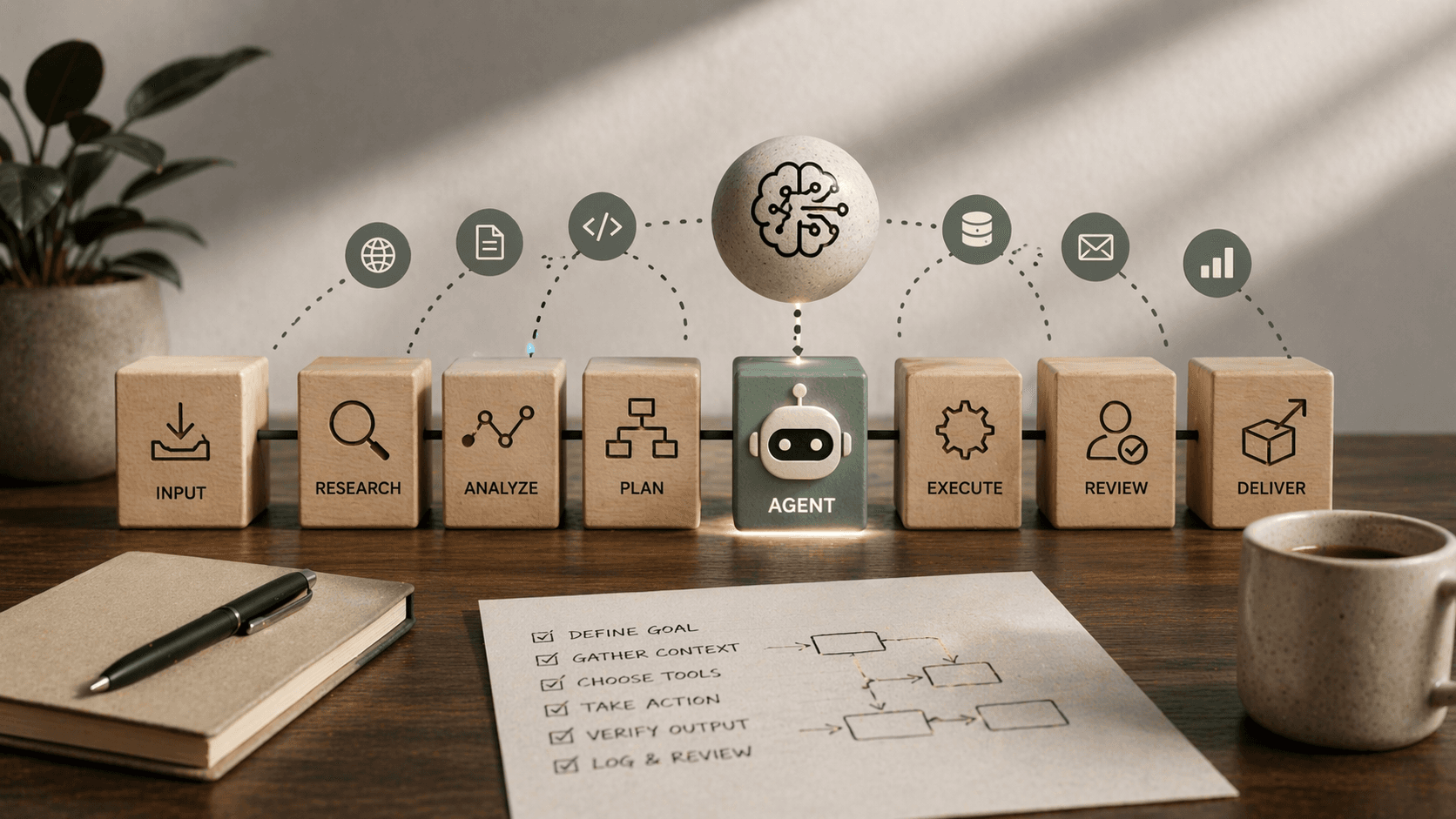

Agentic AI is no longer confined to demos, novelty chat interfaces, or isolated copilots. It is rapidly becoming part of how teams research, draft, route, review, and execute work. What started as prompt-based assistance is evolving into workflow-based systems that can take a goal, break it into steps, use tools, and hand results back with increasing autonomy.
That shift matters because the real value is not just better text generation. It is orchestration. An effective agent can gather context, decide what to do next, call external services, update a system of record, and continue until a task reaches a useful stopping point. In practice, that makes AI feel less like a feature and more like a layer of operational infrastructure.
From Prompts to Workflows
Early AI workflows were mostly linear: ask a question, get an answer, copy the result into another tool, repeat. Agentic workflows are more composable. They can branch, retry, summarize, request clarification, and maintain context across multiple actions. That makes them especially useful for work that is repetitive but not entirely rigid: triage, documentation, QA, customer support, operations, research, and internal tooling.
This is why so many products now emphasize agents instead of simple assistants. The market is converging on a similar idea: users do not just want help writing the next sentence. They want systems that can move work forward.
Why Adoption Is Accelerating
Several forces are pushing this forward at once. Models are better at planning and tool use. APIs are making structured outputs more reliable. Companies are also more willing to expose internal systems through secure interfaces, which gives agents more leverage. Once an agent can read a ticket, inspect documentation, search a codebase, draft a response, and open a change request, the return on automation becomes much easier to see.
There is also a cultural shift underway. Teams are getting more comfortable designing work as explicit flows: intake, analysis, escalation, execution, verification. Agentic AI fits naturally into that model because it performs best when responsibilities, tools, and stop conditions are clear.
What Good Agentic Design Looks Like
The strongest implementations tend to share the same traits. They keep humans in the loop at the right points. They log decisions. They make tool usage visible. They constrain permissions. And they define what success looks like before the agent starts running. Without that structure, autonomy quickly turns into noise.
In other words, the hard part is not simply choosing a model. The hard part is designing a dependable workflow around it. Good agentic systems are less about magic and more about disciplined interfaces, state, validation, and review.
A Useful Starting Point
For teams exploring this space, a practical starting point is to pick a single workflow that is frequent, bounded, and measurable. Build the agent around that narrow path first. Let it gather context, propose an action, execute within a clear limit, and produce an audit trail. Once that loop is reliable, expand its scope.
The proliferation of agentic AI will not come from one dramatic leap. It will come from thousands of well-scoped workflows quietly replacing manual coordination. That is what makes this moment significant: AI is moving from interface novelty to workflow architecture.